
Diamond Color
Color refers to the presence or absence of body color in a diamond. The less color present, the rarer and more valuable the stone.
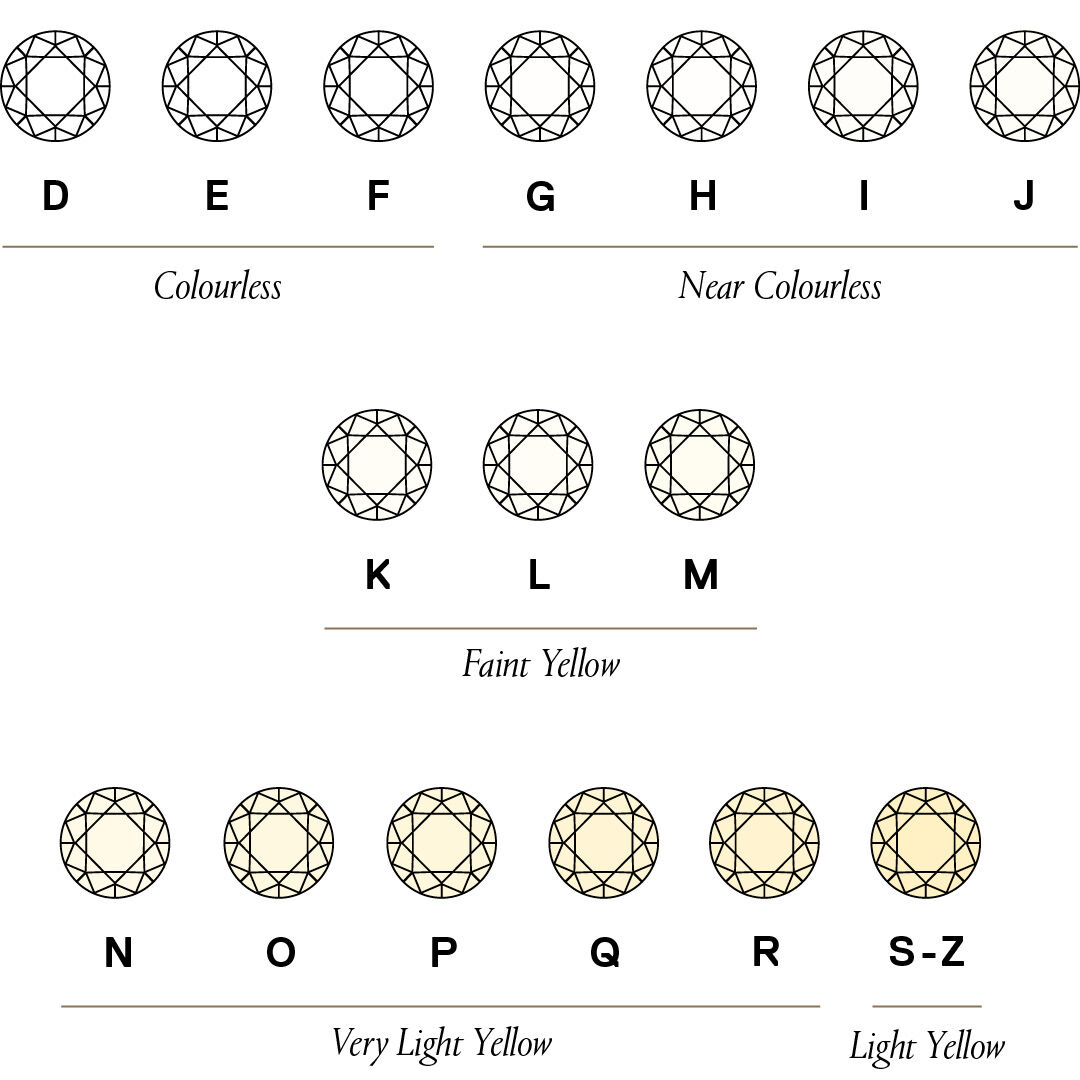
Diamonds are graded on a scale from D (completely colorless) to Z (noticeable color, typically light yellow or brown). Even diamonds in the D–G range can sometimes display subtle undertones, such as faint brown or grayish tints, another reason why expert evaluation is essential.
How Cut Influences Color Perception
Different cut styles can make color more or less noticeable:
Round brilliant cuts
Their facet arrangement maximizes light return, helping to mask slight color tints.
Step cuts (like Emerald or Asscher)
Their broad, open facets reveal more of the stone’s true body color, making even faint hues easier to detect.
How Carat Size Influences Color Perception
Larger diamonds have a greater surface area, making any color more visible. For higher carat weights, many buyers opt for a higher color grade to maintain a colorless or near-colorless appearance.
The Interplay of Shape, Setting, and Size
Color perception is also influenced by a diamond’s shape, cut style, and even the metal of its setting. For example, yellow gold can complement warmer diamond tones, while platinum or white gold can emphasize a diamond’s colorlessness.
Our diamond specialists can guide you through these nuances to find the most beautiful combination for your preferences. Every DIA’LOG diamond is hand-selected and evaluated with precision to ensure it meets our exacting standards, not just on paper, but in person.